empathy for me, not for thee
this post is somewhat about atproto, Bluesky PBC and attie, but generally about open source software, which is nowadays often supported (directly or indirectly) by large companies or VCs, which i'd suggest is a non-trivial influence on open source software direction that maintainers are not always super eager to be open about
some of you haven't led large open software projects and it shows!
"lack of urgent attention to <Foo>" != "lack of care about <Foo>"
at scale, everything is a bandwidth/priority problem. lists of literally thousands of
- CRITICAL 🚨 bug reports
- SHOCKING 😮 UX oversights
- "how is monetization going??" questions from investors (financial landlords! [1])
- messaging nightmares as a cavalier comment or two balloons into the perception of moral bankruptcy by large sections of user-base who only see projections of the event
there are more user needs to serve than you can functionally read. sometimes you're super invigorated by specific, legitimate requests that you drop everything and implement it in an hour, because it's a well-motivated change that you know will make someone happy. but you also have to be pragmatic, because the context switching of "things that don't scale" and the deep thought required by complex and load-bearing work don't mix so well.
distilling everything and moving forward intentionally w/o getting paralyzed, burnt out, or bullied offline is genuinely taxing work that (generally, with exceptions) only people who actually care about the thing self-select into, only to find that there's like 2 humans on your team who know what the actual hell kind of kelp you're in, let alone anyone at home.
not to say that people can't be corrupted by their position of leverage! not to say people don't make mistakes! not to say that protective insulation for deep thought doesn't sometimes cause aloofness! that corrective pressure from "outside" isn't necessary!
but i encourage you, if you harbor mistrust of open software projects important to you, to talk to its maintainers and leaders to build your own intuition about their motivations from first principles. i'd bet that they will be very glad to speak to you when they can, since most maintainers have learned that getting feedback from people they are building for is the most valuable way they can spend their time, save actually building. i'd suggest that if they haven't learned this, you shouldn't use their software because it probably really sucks!
most "open software" maintainers/builders are just nerds in over their depth because they kept getting tagged about their random domain of nerd-ship, or they built a random thing that everyone liked, and they yak shaved a sustainable career out of that very non-linearly.
yes, there are many sad stories of VC means leading to rug pull ends, which leads to well-placed skepticism when a group of funded technologists come around again promising to "make the world a better place". its true that sometimes well-meaning people are captured by extractive interests and are slowly boiled into compromising the ideals that started it all.
but there's all sorts of good "open software" stories (e.g. curl, sqlite, Signal, Blender, OpenStreetMaps, lichess.org) and i think atproto could be one of the best stories yet!
life is messy (atproto community stole its tagline from Sam Altman)
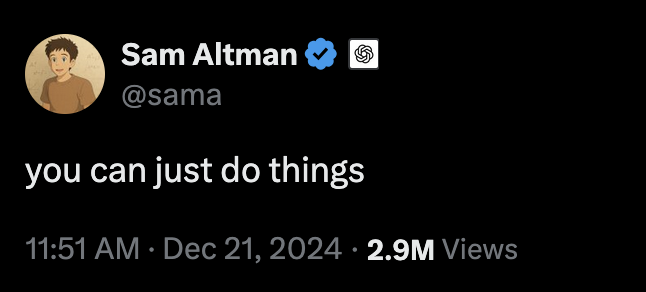
don't listen to what they say, look at what they do. right?
bsky doesn't have ads, it allows you to entirely moderate your experience (could be easier sure -> bandwidth, Link -> composable moderation -> Blacksky), and its dev ecosystem is chock-full of spirited, intelligent and thoughtful people who actively care about what is being built - which is an ecosystem around atproto, and not so much bsky.app.
i actually don't think that releasing attie.ai primarily signals bsky PBC's willingness to eat their young as the Goliath of a ecosystem — though i'll grant the communication around it appeared to have lacked some tact (as an outside observer) and i found Trezy's points in the linked article well-made. my read on attie is that it is a conscious decision, likely with some reservations, to demonstrate what's possible so the ecosystem can update its priors.
what new frontier space is worth building in, given that claude exists?
i think that's the question attie is trying to speak to. imperfectly (as ever) but afaict, without actual malice and in stated loving care of a future they're trying to help build.
btw, i don't think attie as it exists now is groundbreaking, at least the version they released, since creating a feed once you have a server for it is just a structured schema generation.
i see it more as an hors d'oeuvre that whets a wider appetite for the future on atproto.
how could jarvis help me and those i love in our personal data habitat?
"assume positive intent" does not mean "be naive"
i realize this phrase is corporate canon, but circumstantially i think assuming someone's motivations are valid is actually a grace you can extend to good faith humans!
most times, i'm quite sure that i don't know everything about whatever i'm engaged in. when someone says something illegible or confusing to me, i think it is good™️ to stop and try assuming that we have different premises for the interaction, that their premise somehow obfuscates their good faith motivations and expressions. i think that by assuming positive intent we can each likely learn something from each other's premise. generally speaking, i find this dramatically more constructive than assuming malicious intent when i encounter those whose motivations i don't immediately understand, or find upsetting.
if you're reading this, we're in similar weeds! we're in a kelp forest and we must hold fast!
[1]: i am very interested in how we might change the Big-Money-capture-of-startups status quo, but that is not meant to be the focus of this post. i think many good faith projects pragmatically choose to accept investor money from less than ideal places because it appears to be the only path to advancing their (maybe) noble goals, and i hope to live in a world where community-based support structures are economically dominant. i think atproto may have a role in bringing about that future.